
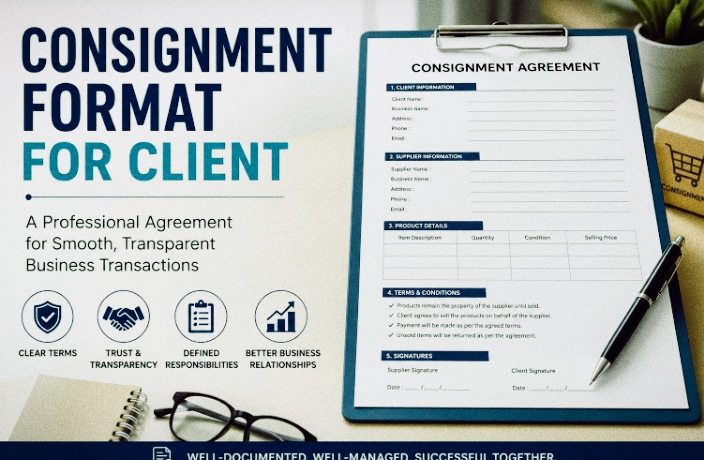
Have you heard about consignment format for client?, today I will be talking on how to create a professional consignment format for client.
Don’t be in a hurry to Skip, read to the Ending. The purpose of this post is for you to Discover key sections, benefits, legal tips, and a free structure to follow in creating consignment agreements invoice.
Note: The purpose of this post is for educational purposes
Consignment Format for Client: A Complete Guide
If you are into a business, you requires clear communication and proper documentation. One of the most important documents for businesses that sell goods on behalf of others is a consignment format for client. Either you own a store, boutique, furniture shop, or online marketplace, having a well prepared consignment agreement helps you to avoid confusion and protects both parties.
A professional consignment format outlines the responsibilities of the supplier and the client, explains payment terms, and provides clear details about the products being sold. It also helps build trust and keeps business transactions organized.
In this guide, you will learn what a consignment format is, why it is important, what it should include, and how to create one that meets your business needs.
Before we proceed I will like to explain what Consignment Format is all about.
What Is a Consignment Format?
A consignment format is a document used when one party, known as the consignor, provides goods to another party, called the consignee, to sell on their behalf. The consignee does not own the products. Instead, they sell them and receive a commission or agreed percentage from each sale.
The ownership of the goods remains with the consignor until the products are sold. If the items remain unsold after the agreed period, they are usually returned to the owner.
A consignment format is a written agreement that clearly explains the terms and conditions of this arrangement.
Why Clients Need a Consignment Agreement
Client need consignment agreement becauee is more than just paperwork. It creates a clear understanding between both parties and helps prevent future disputes.
Protects Both Parties
A written agreement explains the rights and responsibilities of everyone involved. It states who owns the products, who is responsible for storage, and how payments will be made.
It Builds Trust
When expectations are clearly written, both the supplier and the client can work together with greater confidence. A professional agreement promotes transparency and strengthens long term business relationships.
It Reduces Business Risks
Without a written agreement, disagreements about pricing, commissions, or damaged goods can arise. A proper consignment format reduces these risks by documenting every important detail.
Essential Elements of a Consignment Format
A complete consignment format should contain all the information needed for a smooth business relationship.
1: Client Information
Include the following details:
- Full name
- Business name (if applicable)
- Address
- Phone number
- Email address
This section identifies the client and makes communication easier.
2: Supplier Information
The supplier’s details should also be included:
- Business name
- Contact person
- Address
- Phone number
- Email address
Having complete information ensures both parties can easily contact each other when necessary.
3: Product Details
Every item should be listed clearly. Include:
- Product name
- Product description
- Quantity
- Product condition
- Product code or SKU (if available)
Detailed product information helps avoid confusion during inventory checks.
4: Selling Price
Specify the agreed selling price for each product. If discounts are allowed, explain the conditions under which they may be offered.
Clear pricing helps maintain consistency and prevents misunderstandings.
5: Commission Structure
State how much the consignee will earn after each successful sale.
For example:
- Fixed commission per item
Percentage of the selling price
- Clearly defining the commission structure ensures fair compensation.
6: Payment Terms
Payment terms should answer questions such as:
- When will payments be made?
- Which payment method will be used?
- Will payments be weekly or monthly?
- How will sales reports be provided?
This section helps both parties manage their finances effectively.
7: Agreement Duration
Every consignment agreement should have a start date and an end date.
If both parties wish to continue working together, they can renew the agreement after reviewing the terms.
8: Return Policy
Not every product will sell immediately.
Your agreement should explain:
- When unsold products will be returned
- Who pays for return shipping
- The condition products must be in before returning
- A clear return policy prevents future disagreements.
9: Responsibility for Damaged Goods
Accidents can happen during storage or transportation.
The agreement should explain:
- Who is responsible for damaged products
- How losses will be handled
- Whether insurance is required
This protects both the supplier and the client.
10: Signatures
Finally, both parties should sign and date the agreement.
Signed documents provide evidence that everyone agrees to the stated terms.
How to Create a Professional Consignment Format
Creating a consignment format does not have to be difficult. Follow these simple steps.
Step 1: Add Business Information
Start with the names and contact details of both parties.
Step 2: Describe the Products
List every item along with its quantity, condition, and selling price.
Step 3: Explain the Commission
Clearly state how earnings will be shared after each sale.
Step 4: Include Payment Terms
Specify when payments will be made and how they will be transferred.
Step 5: Define Responsibilities
Explain who is responsible for storage, security, damaged goods, and inventory tracking.
Step 6: Review Before Signing
Read the entire document carefully before signing. Make sure all information is accurate and understood by both parties.
Common Mistakes to Avoid
Many businesses make avoidable mistakes when preparing a consignment agreement.
Missing Product Descriptions
Always describe products clearly. Vague descriptions can create confusion during inventory checks.
Unclear Commission Rates
State the commission percentage or amount in writing. Avoid relying on verbal agreements.
No Payment Schedule
Without payment dates, disagreements may occur. Always include a payment timeline.
Ignoring Return Policies
Explain exactly what happens to unsold products.
Not Updating Inventory
Maintain accurate records whenever products are delivered, sold, or returned.
Forgetting Signatures
Unsigned agreements may be difficult to enforce. Always ensure both parties sign the document.
Benefits of Using a Consignment Format
Using a professional consignment format offers several advantages.
Better Organization
All business information is stored in one place, making record-keeping much easier.
Improved Cash Flow
Suppliers can place products in stores without requiring immediate payment, while retailers can offer more products without purchasing inventory upfront.
Reduced Risk
A written agreement minimizes misunderstandings and provides a clear reference if questions arise.
Stronger Business Relationships
Clear expectations help build trust between suppliers and clients, encouraging long-term partnerships.
Easier Financial Tracking
Sales reports and payment schedules become more organized, making accounting simpler.
Simple Consignment Format Template
You can use the following structure as a starting point.
Consignment Agreement
Supplier Information
- Name:
- Business Name:
- Address:
- Phone:
- Email:
Client Information
- Name:
- Business Name:
- Address:
- Phone:
- Email:
Product Details
- Product Name
- Quantity
- Condition
- Selling Price
Commission
Agreed Percentage or Fixed Amount
Payment Terms
- Payment Schedule:
- Payment Method:
Agreement Period
- Start Date:
- End Date:
- Return Policy
Terms for returning unsold goods:
- Damaged Goods Policy
- Responsibilities:
Signatures
- Supplier Signature: ___________________
- Client Signature: ___________________
- Date: ___________________
Frequently Asked Questions
What is a consignment format?
A consignment format is a written agreement that explains how products will be sold on behalf of their owner. It includes product details, payment terms, commissions, and responsibilities.
What should a consignment agreement include?
A good agreement should include client information, supplier information, product descriptions, pricing, commission rates, payment terms, agreement duration, return policies, and signatures.
Is a consignment agreement legally binding?
In many cases, a signed consignment agreement can be legally enforceable. However, local laws may vary, so it is wise to seek legal advice for agreements involving significant value or complex business arrangements.
Who owns the products during consignment?
The consignor, or supplier, remains the owner of the products until they are sold.
Can unsold products be returned?
Yes. Most consignment agreements include a return policy that explains when and how unsold products will be returned.
Conclusion
A well written consignment format for clients is an essential document for businesses that sell products on behalf of others. It clearly defines responsibilities, protects both parties, improves inventory management, and reduces the risk of misunderstandings.
By including complete business information, product details, payment terms, commission rates, return policies, and signatures, you can create a professional agreement that supports smooth business operations. Whether you are a supplier or a retailer, investing time in a clear and organized consignment format helps build trust, strengthens business relationships, and creates a solid foundation for long-term success.
If you need Consignment website with tracking code Contact Us Here to get one done for you